
Maximising Your Mineral Soak
A guide to what's actually in your bath salts, and how to get the most from every soak.
Most of us have a bag or jar of bath salts sitting in the cupboard — added to the water on autopilot, without much thought for what's actually in there or whether it's being used to its full effect. A mineral soak isn't just warm water with something dissolved in it. Each ingredient is doing a specific job, and knowing what that job is can genuinely change how much you get out of twenty minutes in the tub.
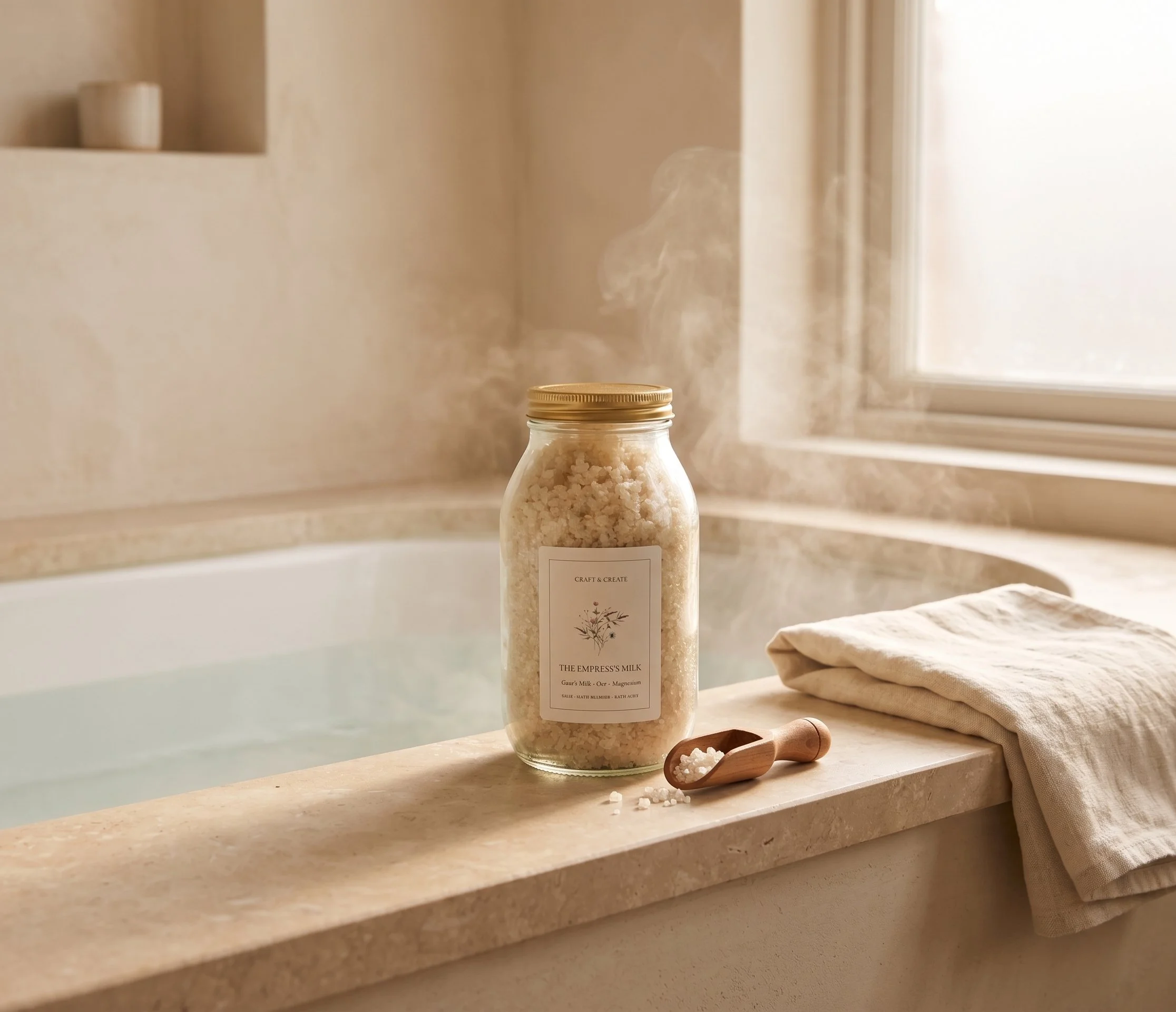
The start of a proper soak — minerals dissolving, steam rising, nothing rushed.
The mineral base: magnesium
Epsom salt is magnesium sulfate, and it's the ingredient doing most of the heavy lifting in any proper mineral soak. Magnesium is the mineral most associated with easing tension in tired, overworked muscles — which is why it's the foundation of almost every therapeutic bath salt, rather than an add-on.
Some blends go further and include magnesium flakes alongside Epsom salt — a more concentrated form of the same mineral, layered in for a stronger effect. If you're soaking specifically to ease physical tension after a hard day, a blend with both is doing double duty rather than relying on Epsom salt alone.
The mineral-rich salts: Dead Sea and Himalayan
Dead Sea salt and Himalayan salt bring something different to the water — a broader spread of trace minerals beyond magnesium alone. They're softening on skin and help create the kind of mineral-dense water that a soak is meant to deliver, rather than just warm water with a scent added to it.
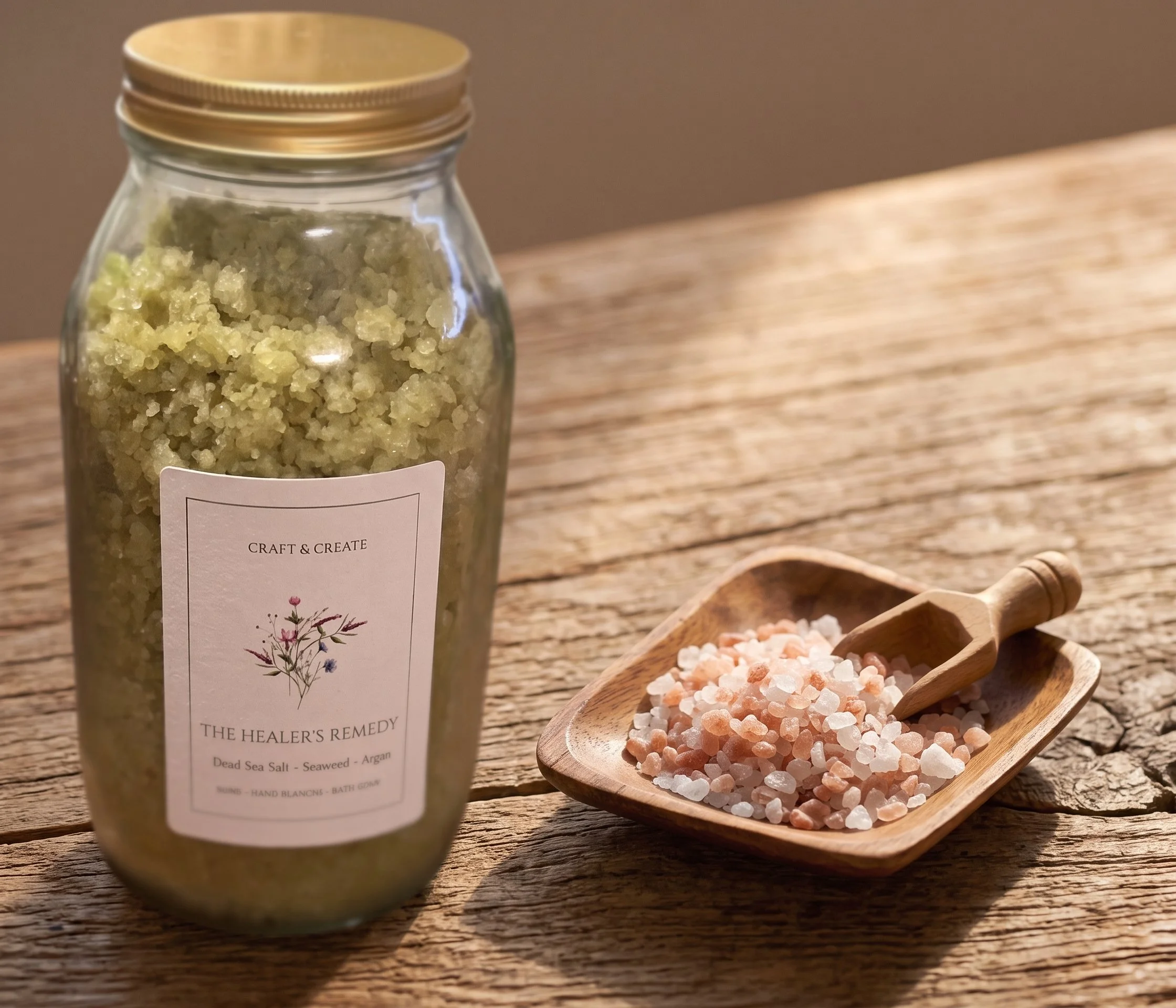
Pink Himalayan and Dead Sea salt, before they meet the water.
For the skin: milk, oat, and oil
This is where a mineral soak starts doing something for skin, not just muscles.
Milk powders (goat's milk is a common one) bring natural fats and lactic acid to the water — softening and gently conditioning skin as you soak, rather than just leaving it merely clean.
Oat — usually as colloidal oatmeal or oat flour — is calming and cushioning once it meets water. It's an ingredient with a long history in skin care specifically because it soothes rather than strips.
Jojoba oil is chemically close to the oil skin naturally produces, which is why it absorbs so easily rather than sitting on the surface. Argan oil works similarly, leaving skin conditioned rather than dry once you towel off — something worth knowing if you tend to come out of a bath feeling tighter than when you got in.
From the sea: bladderwrack
Bladderwrack seaweed extract is a less familiar name on an ingredients list, but it's been used in mineral soaks for a long time. Rich in trace minerals, it adds a conditioning effect on skin that complements what the salts themselves are doing — a smaller-scale ingredient that's still pulling its weight.
The finishing note: aromatics
Lavender, chamomile, eucalyptus, rosemary — whichever aromatic note a blend carries, this is the part that shapes how the whole soak feels. A soft, calming lavender-chamomile note is built for winding down before bed. A clearer, brighter eucalyptus-rosemary note is better suited to soaking away physical tension rather than sending you straight to sleep. Worth choosing your soak based on what kind of evening you're actually having, not just which jar smells nicest.
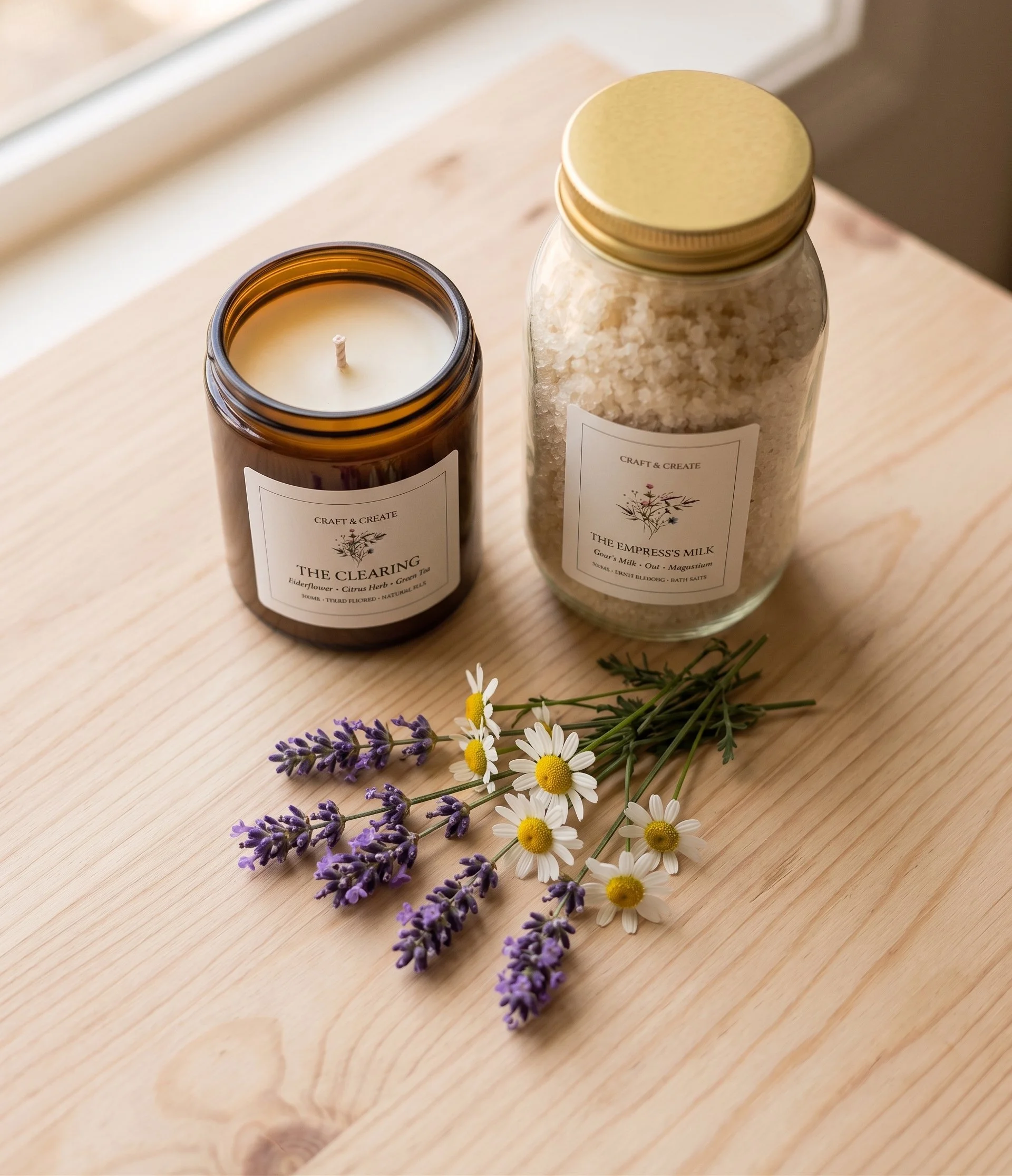
The calming note — lavender and chamomile, built for winding down.
Getting the most from your soak
A few things that make a real difference to how effective a mineral soak actually is:
Use enough. Two to three handfuls per bath is generally the right amount to get a genuinely mineral-rich soak, not a token sprinkle.
Let it dissolve before you get in. Swirling the water to disperse the salts fully means you're soaking in an evenly mineral-rich bath, rather than sitting on top of undissolved crystals at the bottom.
Time matters. Fifteen to twenty minutes is generally considered the point where magnesium and other minerals have had a real chance to be absorbed, rather than a quick five-minute dip.
Water temperature. Warm rather than very hot — hot water can be more drying on skin, and won't meaningfully speed up mineral absorption. Warm is more sustainable if you're soaking for the full twenty minutes anyway.
Frequency. A mineral soak most evenings is a very different thing to one bath a month. If muscle tension or sleep is the goal, consistency matters more than any single soak.
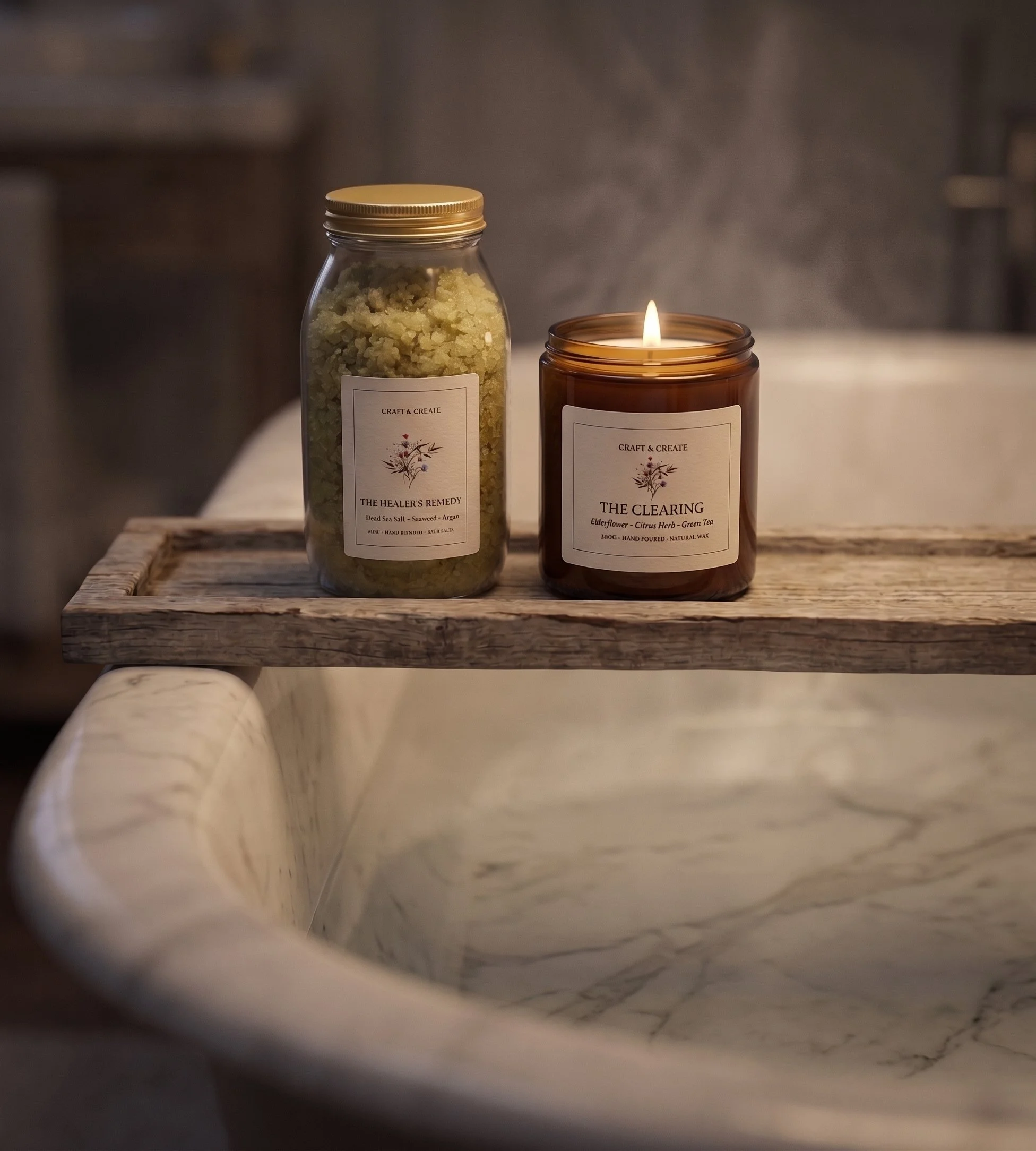
Fifteen to twenty minutes, and nowhere else to be.
Every one of our bath salts — The Empress's Milk and The Healer's Remedy — is built around the same idea: real minerals, chosen and measured for what they actually do in the water.