
Essential Oils and Fragrance Oils in Candles: A Simple Guide
Walk into any candle shop and you will meet two kinds of scent: essential oils and fragrance oils. Both can fill a room beautifully, but they are made in different ways and they behave differently in the wax. This guide explains what is going on, in plain English, so you can choose with confidence.
Where they come from
Essential oils begin in the plant. Leaves, flowers, peel, bark and wood all hold tiny pockets of aroma, and an essential oil is that aroma, captured. Most are made by steam distillation: steam passes through the plant material, carries the aroma with it, and is then cooled so the oil separates from the water. Citrus oils are different, because they are pressed straight from the peel. Because they come from a crop, an essential oil can vary a little from one harvest to the next, rather like wine or honey.
Fragrance oils are built by a perfumer, in the same way a perfume is. The palette includes scent ingredients that are made in a laboratory, ingredients separated out from natural sources, and often essential oils as well. Many of these are exactly the same molecules found in plants. Linalool, for example, is part of what gives lavender its scent, and it is also used in fragrance oils.
This is what lets makers create scents that no plant will give you, such as fresh linen, rain-washed air or a bakery, and make the same scent again and again.
How they behave in a candle
A candle scents a room in a surprisingly simple way. The flame melts a small pool of wax, and the fragrance in that pool evaporates, rises with the warm air and drifts around you. Makers call the scent of an unlit candle its cold throw and the scent while it burns its hot throw.
How a scent behaves depends on how quickly its different parts evaporate. Perfumers describe scents in three layers, called notes:
Top notes are light and quick, such as lemon, grapefruit and peppermint. You smell them first, and they fade first.
Middle notes are the heart of a scent, and include flowers such as lavender, geranium and rose.
Base notes are heavy and slow, such as sandalwood, cedarwood, vetiver and patchouli. They linger, and they help hold the lighter notes in place.
The exact lines vary a little between perfumers, but the idea is a useful one. It explains why a candle made mostly from light notes can smell lovely in the jar and seem to fade once it is lit. It is also why many beautiful essential oil candles are blends: a bright, light note paired with a heavier one to lean on.
Fragrance oils for candles are developed and tested with hot wax in mind, which is why many are strong and consistent. Essential oils tend to give something softer and more delicate. Neither is better or worse. It is a different experience, and some people prefer exactly that.
Whichever a maker uses, the result also depends on the wax, the wick and the size of the jar, so a careful maker tests every candle in its own jar before selling it.
Is natural always gentler?
"Natural" tells you where a scent comes from. It does not tell you how it will affect you. Plants naturally contain many of the ingredients that are classed as fragrance allergens, such as limonene in citrus peel and linalool in lavender, which is why essential oils carry allergen labelling too.
In the same way, a scent composed by a perfumer is not automatically harsh. A molecule behaves the same whether it came from a plant or a laboratory, so what matters is the amount used and how each person reacts to it.
What the label can tell you
Candle labels in Great Britain name certain fragrance allergens when they are present above set levels. Where the total is higher, the label also carries a warning symbol and wording. If you know you react to something, the label is where to look, and it works the same way whichever type of oil the maker has used.
Pets and ventilation
If you share your home with animals, it is worth taking a little extra care with any scented product. The MSD Veterinary Manual explains why:
Cats lack an enzyme that other animals use to break down some of the compounds found in certain essential oils, and they also take in oils when they groom.
Birds have delicate airways that react to fragrance and airborne particles.
Dogs can be affected too, particularly if they already have breathing problems.
Most of the cases it describes involve concentrated oil, or diffusers that release a fine mist, rather than a burning candle. Most of what is published concerns essential oils, so it is sensible to take the same care with any scented product.
Whichever you choose, ventilate the room, let pets leave freely, keep birds well away from candles, keep oils and candles out of reach, and check with your vet if you are unsure.
Cost and sourcing
Price varies a lot with both. Some essential oils are affordable, while others, such as rose or sandalwood, cost many times more because of how much plant they take and how hard it is to grow. Fragrance oil prices vary with the supplier and the complexity of the blend, so a higher price does not always mean a particular type of oil.
Sourcing makes for an interesting story on both sides.
Essential oils can take a large amount of plant for a small bottle. Some plants, such as rosewood, are slow-growing and under pressure, as the Tisserand Institute explains, while cultivated sandalwood oil is now produced in Australia.
Fragrance ingredients come from a mix of sources. Some perfumery ingredients are made from a by-product of paper-making, as CHIMIA describes, while others come from citrus peel or from laboratory chemistry.
Neither is automatically the greener choice. It depends on the ingredient and how the supplier sources it, so it is fair to ask any maker where their materials come from.
How we choose at Craft & Create
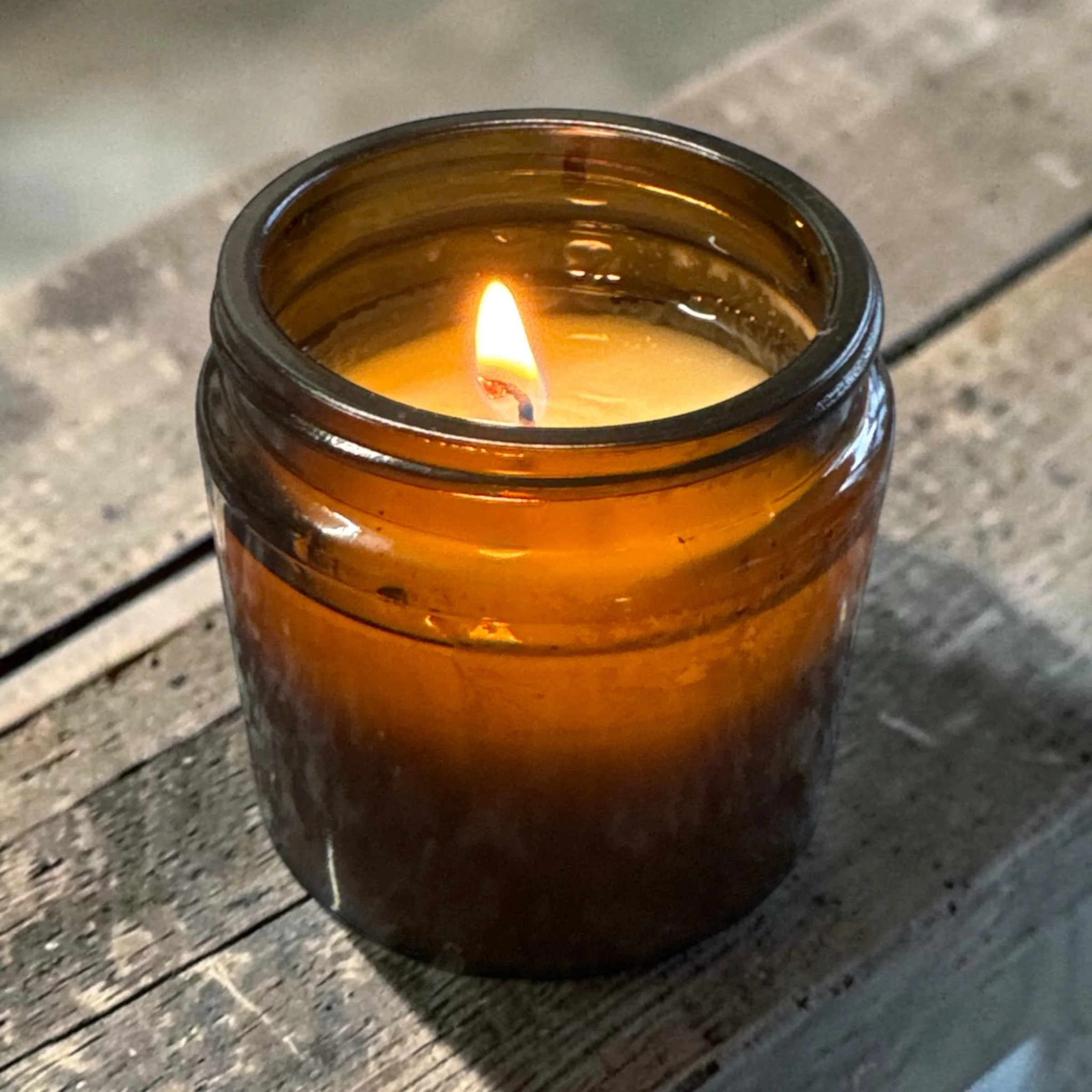
We scent our candles, with fragrance oils made for candles, blended in house so each scent is unique to us. Every candle is tested in its own jar, and every fragrance is assessed and labelled under the UK rules.
We use essential oils too. They scent our soaps and bath salts, and we are working towards an essential oil candle for the range. We love both, and there is room for both.
Choosing a candle that suits you
Start with how you want your home to feel. Soft and delicate, or rich and full, there is no wrong answer.
Read the label. It names certain allergens and explains how to burn the candle safely.
Think about who shares your space. Pets, birds, small children, and anyone sensitive to scent are all worth considering.
Ask the maker. A good maker is glad to explain what is in their candle, how it was tested and how it is labelled.
Sources
Checked October 2026. This is general information, not medical advice.